Merlijn - 17 / Oct / 2026
The new EU Greenwashing regulation became effective - what does it mean for you?
Since 27 September, new European rules on sustainability claims have come into effect. That means: no more vague promises, no self-invented certifications, and no greenwashing without consequences. As a consumer, it will become easier to make truly sustainable choices. Curious about what exactly is changing? Read on to find out.

On September 27th, the new EU greenwashing directive took effect. Its full name is 'Empowering Consumers for the Green Transition', or 'EmpCo' for short. At first glance, this might not seem particularly special. After all, there have already been many attempts to combat greenwashing. Yet this updated legislation is going to change your customer experience. In the supermarket, the drugstore, and also at Grace is Green.
91% of consumers believe that brands engage in greenwashing. Around 40% of sustainability claims turn out to have no supporting evidence. The updated EU legislation aims to bring clarity to this. In this blog, we'll tell you more about the reason behind this update to the greenwashing directive. We'll also explain what it means in practice and what you'll notice about it on this website.
Why is updated legislation coming now?
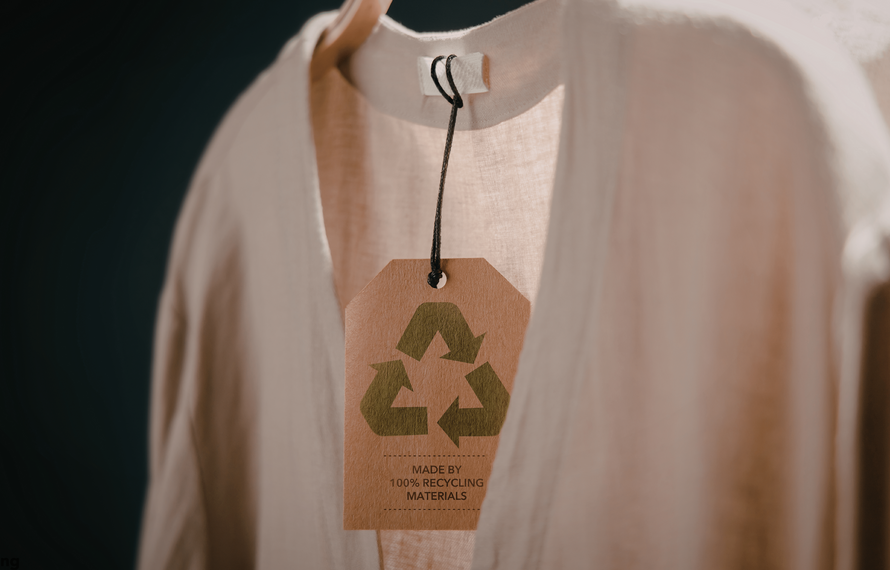
Companies make many so-called 'sustainability claims', or 'green claims'. This is a form of expression that discusses the environmental impact or score of a product or producer/seller, whether images, certifications, or text. Think, for example, of advertising copy or claims about an ecological footprint, recycled materials, or energy consumption during production.
Due to the growing popularity of sustainability, more and more companies have started 'greenwashing'. This means these companies exaggerate or even invent their sustainability claims. This incorrect information unfortunately appears increasingly often in the supermarket, online, but also in texts about companies themselves.
Thanks to regulations from, for example, the EU, this number has been declining in recent years, but we're still far from done. In 2024, the number of companies engaging in greenwashing dropped by as much as 12%. But at the same time, several major greenwashing scandals occurred in recent years.
And not just at large companies: in general, the line between accurate and inaccurate sustainability claims is often thin or unclear. That's why the European Union began developing this new directive in 2024.
What does this legislation involve?
EmpCo is a change of existing legislation. It requires that the sustainability claims companies make must be substantiated, and the supporting evidence clear and accessible. This prevents companies from making sustainability claims without justification.
In addition to being accessible, the information must also be visible. If you claim sustainability as a company, the customer must be able to find visible substantiation for that claim. This means it shouldn't be hidden away somewhere.
Substantiating sustainability claims is also a sensitive point. In recent years, for example, some companies have used their own certifications, effectively meaning they simply met their own requirements. But under EmpCo, labels must be independently certified or come from a government body. Examples of this are Allergy Certified, Ecocert, and the EU Ecolabel.
Is there enforcement behind the legislation?
Each EU country gives its own interpretation to the enforcement of this legislation. It's difficult to disprove sustainability claims based on EmpCo. After all, the legislation is broad and leaves room for interpretation.
That's why each case needs to be assessed individually to determine what counts as misleading. It also depends on the context in which the words are used. Take the word 'natural': something can be an obvious, natural choice, while the product itself isn't 100% natural.
In the Netherlands, where Grace is Green is based, it is ultimately a state authority that decides whether a company violates the new legislation. This can theoretically lead to a fine, but is more often used as leverage to encourage companies to comply with the new legislation.
What does this mean for Grace is Green?
The new directive is positive for sustainable businesses. It ensures that the sustainability claims companies make actually need to be substantiated. Both customers and sustainable businesses benefit from the declining amount of greenwashing by other businesses.
At the same time, it also takes effort to verify claims. Grace is Green works closely with the brands it offers to guarantee that the products you find here genuinely contribute to a better world. Still, the new legislation often calls for more explanation than can currently be found on the website. For example, a claim like "Safety" will need to be explained further, such as "studied and trusted by experts in the field of X."
That takes some effort, but the effort is certainly worth it: customer trust and honest marketing, with the goal of more customers choosing the truly sustainable option.

What will you notice from this?
In the coming period, sustainability claims on websites, in advertisements, on packaging, and in other places will become clearer and more transparent. At Grace is Green too, we'll be making the necessary adjustments. Ultimately, things will become clearer for everyone: thanks to the evidence requirement and disclosure obligation, you as a customer will be better able to hold brands accountable for their claims. This will make it easier for you to make a well-informed choice in the future.
Sources: ChangeINC (Maaike Kooijman), European Commission, Authority for Consumers and Markets, Chamber of Commerce
Continue reading:
Read more about circular economy topics at the European Union: https://environment.ec.europa.eu/topics/circular-economy-topics/green-claims_en
Read more about consumer's rights and complaints by the EU: https://commission.europa.eu/topics/consumers/consumer-rights-and-complaints/sustainable-consumption_en