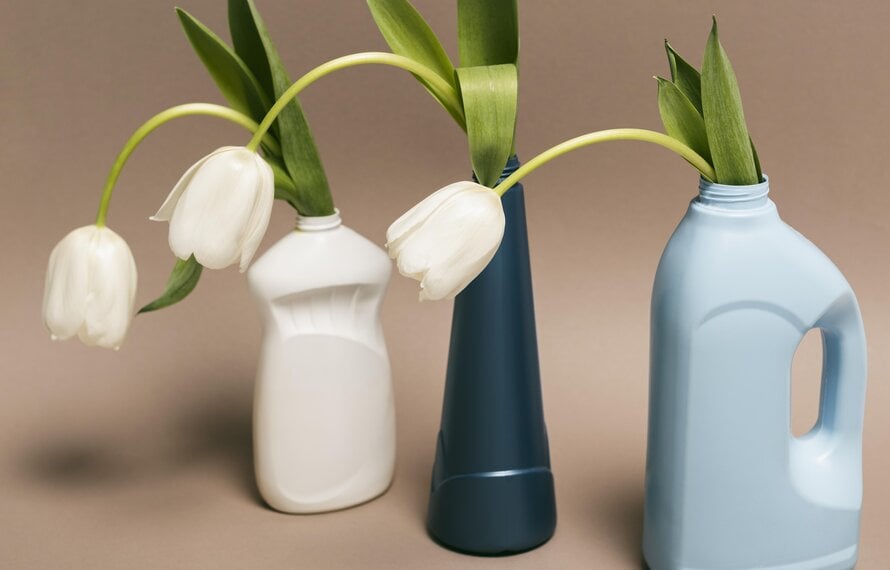
Merlijn - 03 / Jul / 2026
Perfume in your products? Why 'clean' often means 'chemical'
Do you recognize that lovely 'freshly washed' scent? That's often not the smell of 'clean,' but of perfume. Clean, in principle, doesn't smell like anything. Through advertising and habit, our noses have been trained to associate certain smells with 'clean.' What's more, behind that little word 'parfum' on your label hides a mixture of sometimes as many as a hundred substances.

That lovely, freshly washed scent
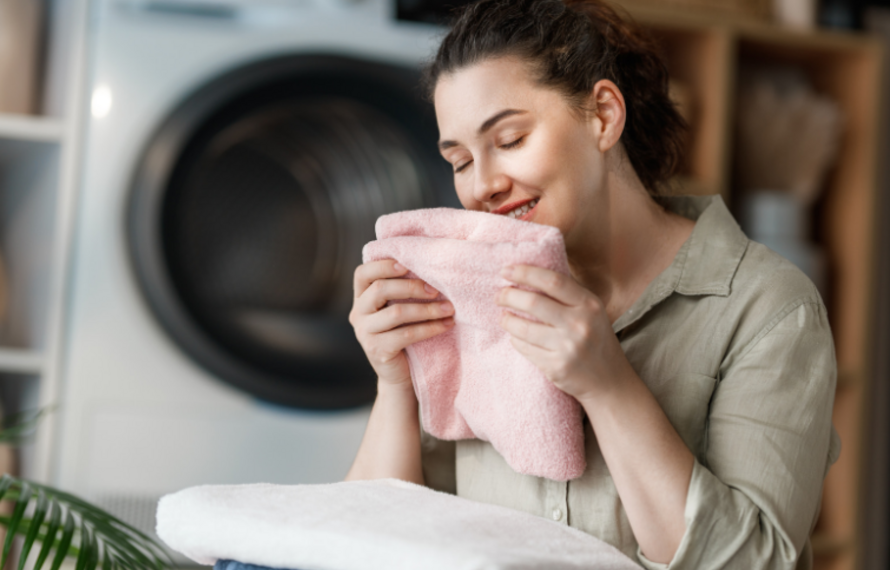
Everyone knows the feeling: you pull a load of laundry out of the machine and bury your nose into a freshly washed towel. There it is: that lovely smell of 'clean.' Fresh and just-washed. This blog answers the uncomfortable question of what you're actually smelling in that moment. Because 'clean,' in principle, doesn't smell of anything.
Check out our great range of laundry and cleaning products here.
Why some smells are 'fresh'
Our nose isn't a neutral machine. It's tuned to what many people consider 'nice' or 'nasty'; that's how our noses get trained. This happens largely in childhood, when you learn to associate certain smells with judgments. It's the result of your family, advertisements, and habits.
To illustrate, psychologists at Radboud University showed in a well-known study ("Smells Like Clean Spirit") that people who were unconsciously exposed to a citrus-scented all-purpose cleaner more quickly recognised cleaning-related words and thought about cleaning. So your thoughts about a smell are predetermined.
In this way, associations with smells like citrus, lavender, or 'ocean breeze' aren't innate but learned — ingrained over decades by advertising and habit. In other words, we don't just buy clean; above all, we buy the feeling of clean.
What is perfume, actually?
The smells you associate with clean are often synthetic or natural perfumes. A perfume isn't a single substance but rather a recipe. It can be built up from dozens of different components. Some scent mixtures contain as many as a hundred. The International Fragrance Association IFRA counts almost 3,000 different chemical substances that can be used in the formulas. From this enormous pool, a unique mixture is composed for each product.
This mixture consists — put simply — of three different categories of ingredients. First, the scent-givers. These can be synthetic or natural substances, such as bergamot, lavender, or sandalwood. Second, the fixatives. These make the scent linger longer (to fix). A well-known example is phthalates. Finally, there are also synthetic musks such as galaxolide, which provide a long-lasting scent.

So how should you read the labels?
If you want to know exactly what mixture the perfume in your product is made of, the average ingredient list on your detergent, deodorant, or body lotion won't get you very far: chances are, it simply says "parfum." The precise composition doesn't have to be listed because, under the regulations, it may be regarded as a 'trade secret.'
For a product you smear on your skin every day, that's a rather strange thought. If you do want to see through it, it's worth paying attention to the list of allergens. After all, since 2023 there's been an EU regulation requiring companies to declare 82 different fragrance allergens on this list if they're present in the product.
Unscented vs. fragrance-free
One final catch: although many people think otherwise, unscented and fragrance-free don't mean the same thing. The same goes for odourless versus odour-free. The meaning of fragrance-free is clear: there may be no ingredients intended to add scent. This covers both synthetic perfumes and natural fragrance substances.
'Unscented,' by contrast, is more about the perceptible smell. To achieve such a neutral smell, chemical or natural scent maskers or 'neutralisers' may well have been added to hide the original smell of ingredients.
What odourless masking means
Finally, scent isn't always added because a product should smell so nice. Often it also serves the function of hiding something. Think of a cleaning product: a heavy citrus or pine scent smells 'clean,' but in fact simply overpowers other odours — those of the ingredients doing the real work.
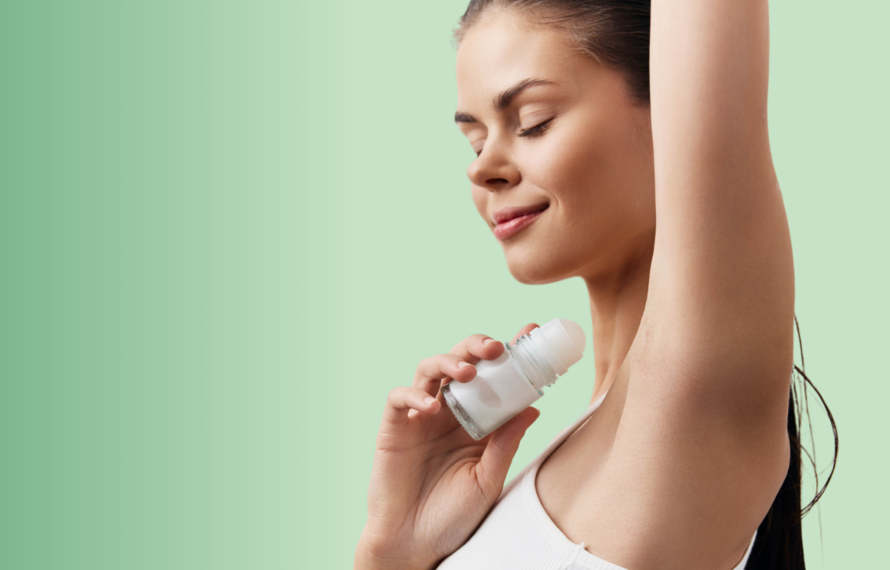
Many deodorants also mask sweat with perfume. In doing so, they don't tackle the main cause. Because sweat doesn't actually smell at all. Want to know more? Then read our latest blog: Why does your deodorant stop working after a few hours?

Why does all this matter for your skin?
Good to know, but why should you care? Well, your skin often does notice the use of perfume. Research shows that perfume ingredients frequently cause contact allergies worldwide. People with sensitive skin or eczema also react to perfume regularly. The EU itself estimates that between 1% and 9% of the European population is allergic to fragrance allergens.
That sensitivity weighs extra heavily with products that stay on your skin all day. A deodorant, moreover, sits for hours on an especially sensitive spot. Baby care lands on supple but very vulnerable skin. It's precisely in those places that you don't want a vague scent mixture doing its thing all day long. Struggling with sensitive skin? Then read our new blog on the difference between skin allergies and irritations.
Fragrance-free isn't boring
Do these risks mean everything now has to smell of nothing? Thankfully not. We already touched on the difference between natural and synthetic scent mixtures. Take a deodorant with bergamot and lime. It smells subtle, and the scent isn't a separately added layer of perfume: it's simply how those ingredients naturally smell.
And would you rather smell nothing at all? That's possible too, and there's absolutely nothing wrong with it. There are plenty of products that are completely fragrance-free and do their job odourlessly. Think of the Derma line without added fragrances: exactly what you want for your sensitive skin.
The certification that does your homework
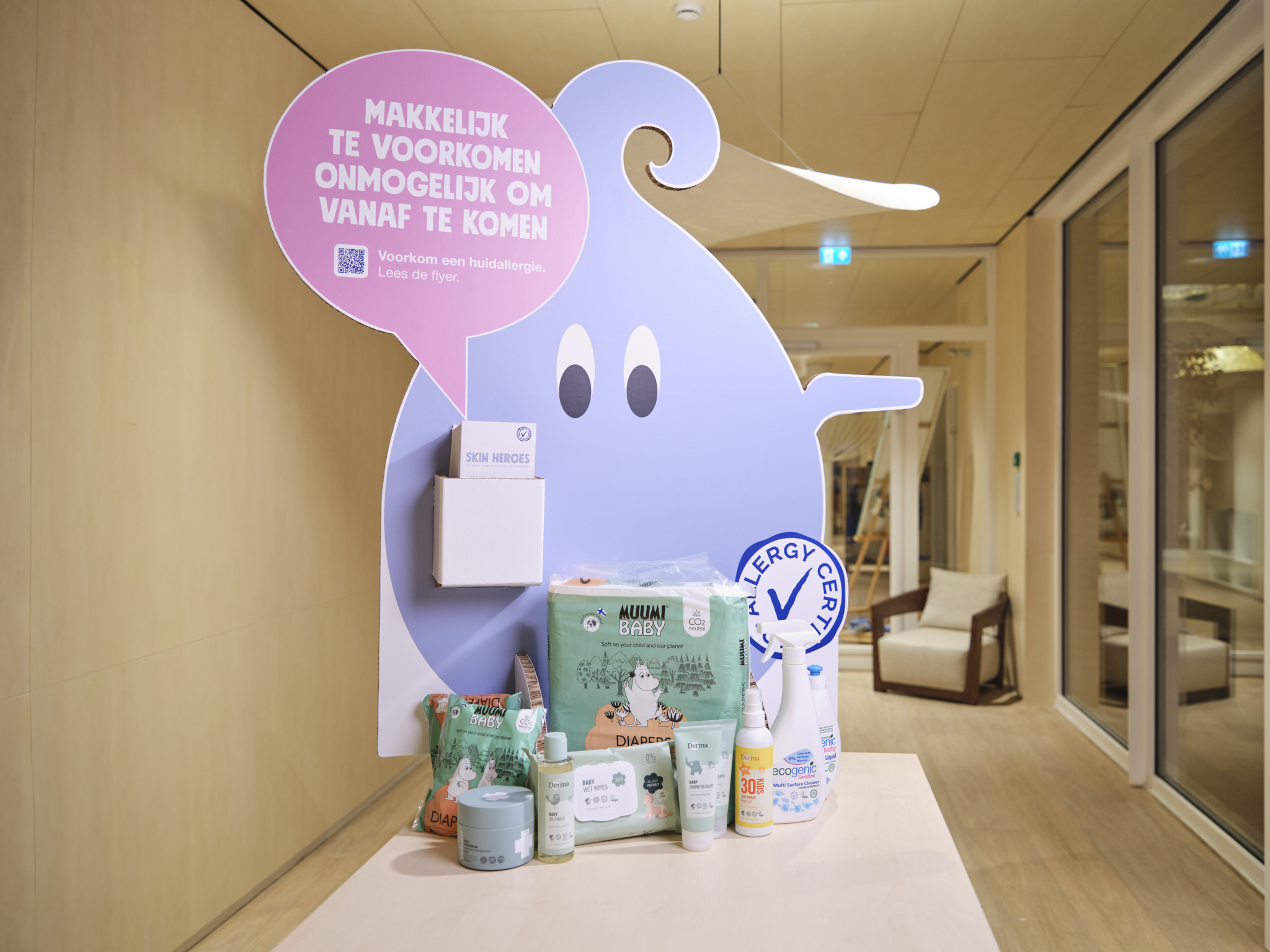
Even easier than deciphering labels is asking for help. The independent AllergyCertified label helps you make an allergy-friendly choice with an ingredient index and a seal on products that have been assessed by toxicologists. This label checks for hormone-disrupting and carcinogenic substances and allergens.
Check out our AllergyCertified range here.
Start small
The message you've come to expect from us: start small. You really don't have to empty your entire bathroom cabinet tonight. If you want to change something, start with the products that sit longest and closest to your skin: your deodorant and your little one's care. And who knows — maybe your 'clean' will soon smell in a whole new way.
Shop for your perfect skincare and household products at Grace is Green now.
Sources: Sofia Botvid et al. “Contact sensitization to fragrance mix I and fragrance mix II among European dermatitis patients: A systematic review.” Contact Dermatitis. | **Internal Market, Industry, Entrepreneurship and SMEs, “Fragrance allergens labelling.” European Commission. | Rob W. Holland et al. “Smells like Clean Spirit: Nonconscious Effects of Scent on Cognition and Behavior.” Psychological Science. | Commission Regulation (EU) 2023/1545 | Made Safe Certified | EIN Presswire | KRO-NCRV | Ethique