




Why do some sunscreens leave a white cast?
It comes down to the mineral filters in your sunscreen. More and more people are using a sunscreen based on a mineral UVA or UVB filter. This is better for the environment and your skin than a chemical filter. The filters used are often titanium dioxide or zinc oxide. They reflect UV radiation, so it can't penetrate your skin.
Besides the type of filter, sunscreen can also consist of nano or non-nano particles. Traditional mineral sunscreen uses larger non-nano particles. These scatter visible light on the skin, which is how a white cast can appear.
Sunscreens with nano-sized filters, both with titanium dioxide and zinc oxide, prevent a white cast on the skin while still protecting it. Want to know why this doesn't mean a nano filter is always better? Then read on.
Discover our sunscreen range here, with products from UpCircle, Sol de Ibiza, and Derma Sun.
Why is it so much worse with one sunscreen than another?
The explanation for the white cast isn't just about particle size, though. It also matters a great deal how these are worked into the formula. The higher the SPF and the more filters, the thicker and whiter the layer usually becomes.
Even the way you apply your sunscreen counts. If you apply too much, or spread it unevenly, the cast becomes more visible. And finally, a poorly blended filter often shows up more on a deeper skin tone than on a lighter one.
Unfortunately, there's no universal rule for how much sunscreen to apply, as this depends on many different factors. To help you on your way, a Dutch skin cancer foundation developed a rule of thumb:
- 1 teaspoon for the face and neck
- 2 teaspoons for the arms and shoulders
- 2 teaspoons for the chest, stomach and back
- 2 teaspoons for the legs and feet
Don't forget your ears, lips and feet either. And of course reapply regularly (every 2 hours), before you go into the sun and even when you're only sitting in the shade.
Is the white cast down to the sunscreen or how you use it?
The previous two sections have shown that the white cast comes from a combination of composition and use. The formula lays the foundation through the particle size, the oxide concentration, and the blending quality. Your influence on this is small, but it's there. Make sure you always spread your sunscreen well, and use the rule of thumb above while you do.
Does less cast also mean less protection?
No, and that's a common misconception. Because sunscreen used to leave a white cast more often due to poorer blending, we're quick to link a feeling of protection to the white colour. But it's simply the result of a different, equally protective particle. So it's no measure of how much protection you're getting.
A smooth sunscreen with the same SPF and UVA and UVB filters therefore protects just as well as a thick, white variant.
Should I always choose a filter made of nanoparticles?
If nanoparticles can prevent a white cast, why doesn't everyone just always choose them? Unfortunately, it's not that simple: precisely because nanoparticles are so small, they wash off more easily into the water when you swim. Nano zinc oxide can dissolve in seawater this way and release zinc ions. Some studies suggest this can cause coral bleaching, though the science isn't fully settled on this yet.
Should I worry about the white cast?
Not really. As we've seen, the cast says nothing about how well you're protected, because zinc oxide and titanium dioxide block UV radiation whether they leave a visible white trace or not. What's more, the white cast is actually the sign of a non-nano filter that stays on your skin rather than disappearing into the sea.
For your skin, a white cast isn't harmful either. Precisely because the mineral filters stay on top of your skin and don't sink in, they don't disrupt your hormone balance and rarely irritate. That makes mineral sunscreen just as suitable for sensitive skin.
Which natural sunscreen suits you best?
Now that you know where that common white cast comes from and that it isn't harmful, it's worth looking at the sunscreen you use yourself. That choice depends on your usage and your skin.
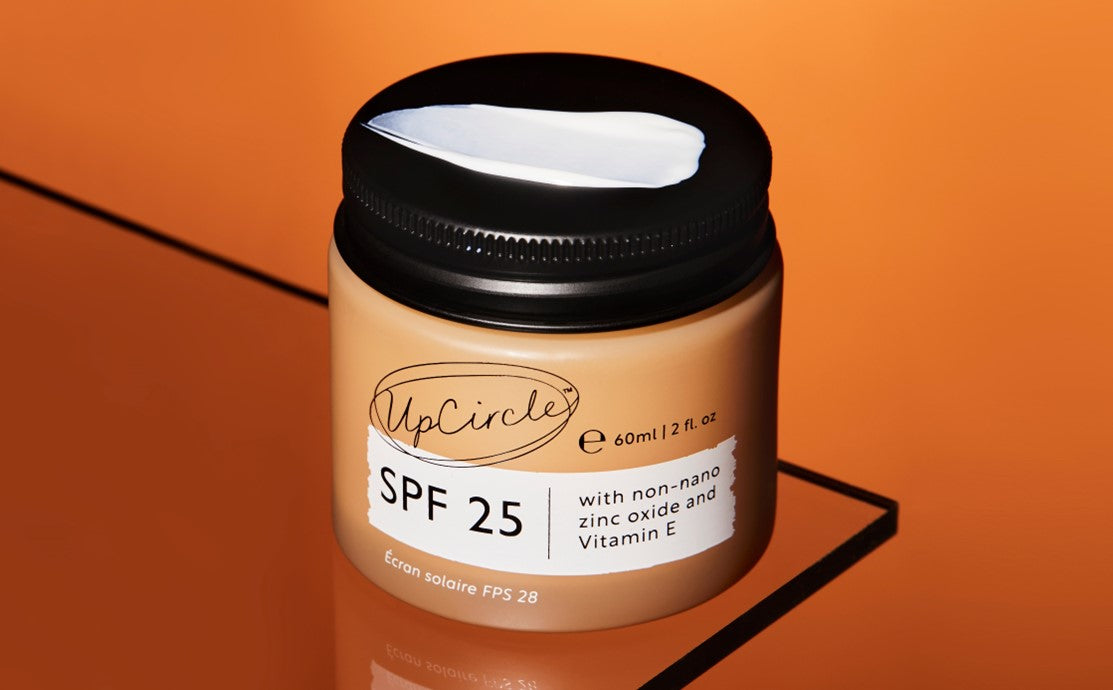
Do you have sensitive or troubled skin? Then take a look at the UpCircle SPF25. This mineral sunscreen with non-nano zinc oxide contains aloe vera and acne-fighting lavender oil. It's lovely for the face and for daily use.
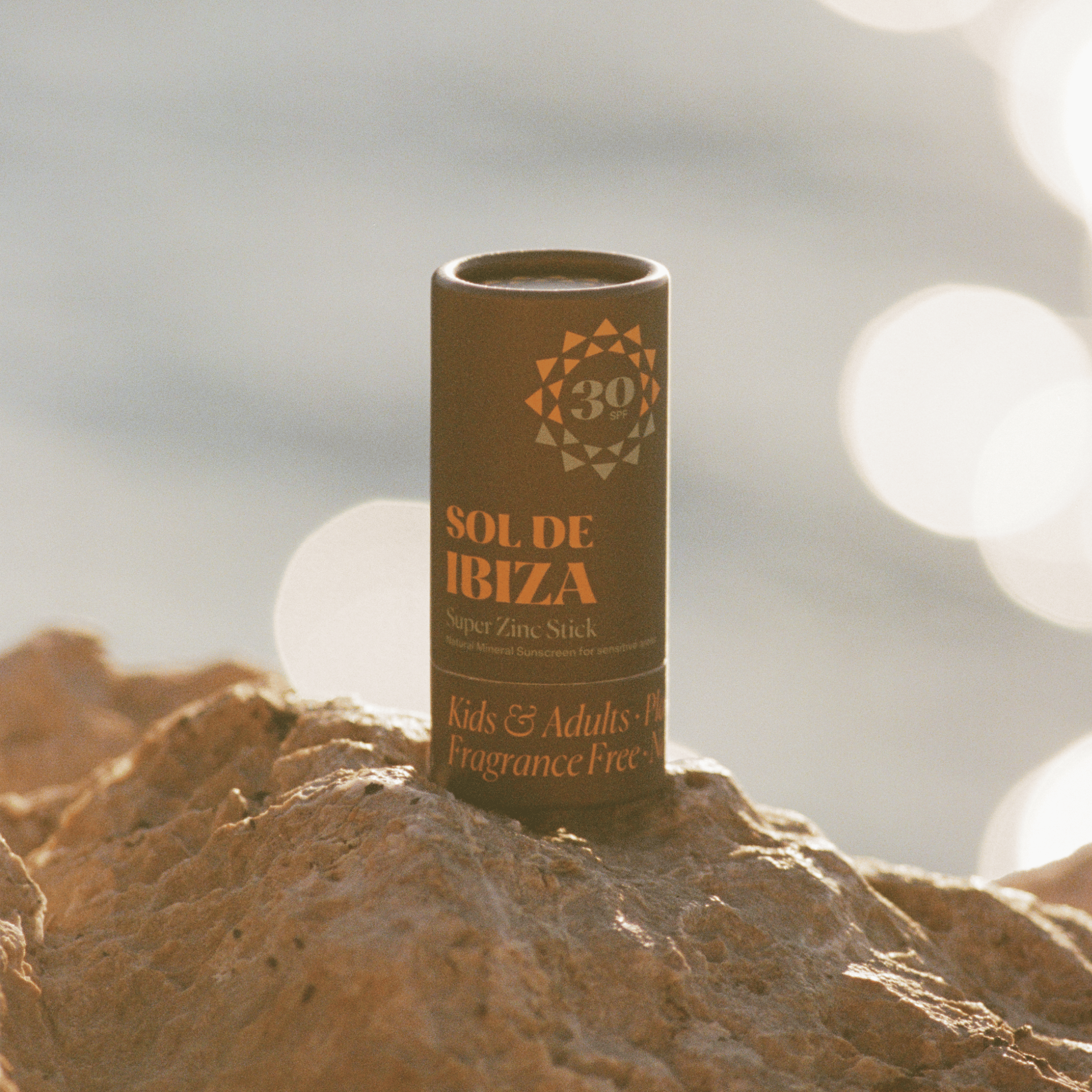
Want a sunscreen for both face and body? The Sol de Ibiza SPF30 deliberately uses non-nano zinc oxide, so the particles stay on your skin and don't end up in the sea. That's also why Sol de Ibiza earned the title 'reef safe'.
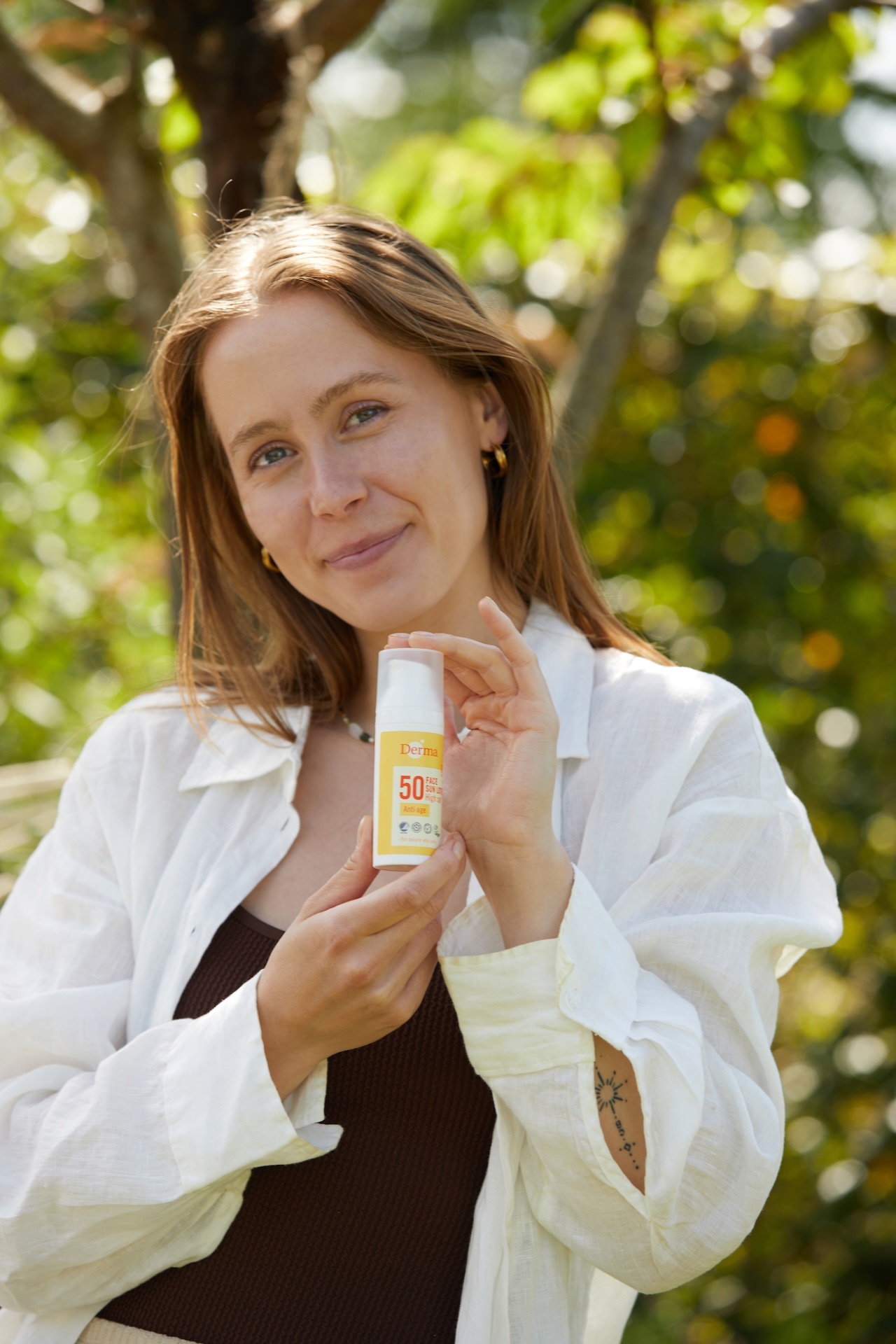
Do you have eczema- or allergy-prone skin? Then the Derma Sun line is a lovely choice, with variants up to SPF50 and the Nordic Swan Ecolabel for a demonstrably eco-conscious formula.
(Dutch) sources: Huidkanker Stichting, Vogue NL, Jouw Huidtherapeut, PFASwijzer