Merlijn - 26 / Jun / 2026
Why does your deodorant no longer work after a few hours?
Do you already smell that familiar sweat odor after a few hours, despite your ‘strong’ deodorant? Logical, because most deodorants do not work effectively at all. Some tackle the wrong culprit, while others irritate your skin. Read on quickly to discover how you can prevent the discomfort of unpleasant odors and stay fresh all day.
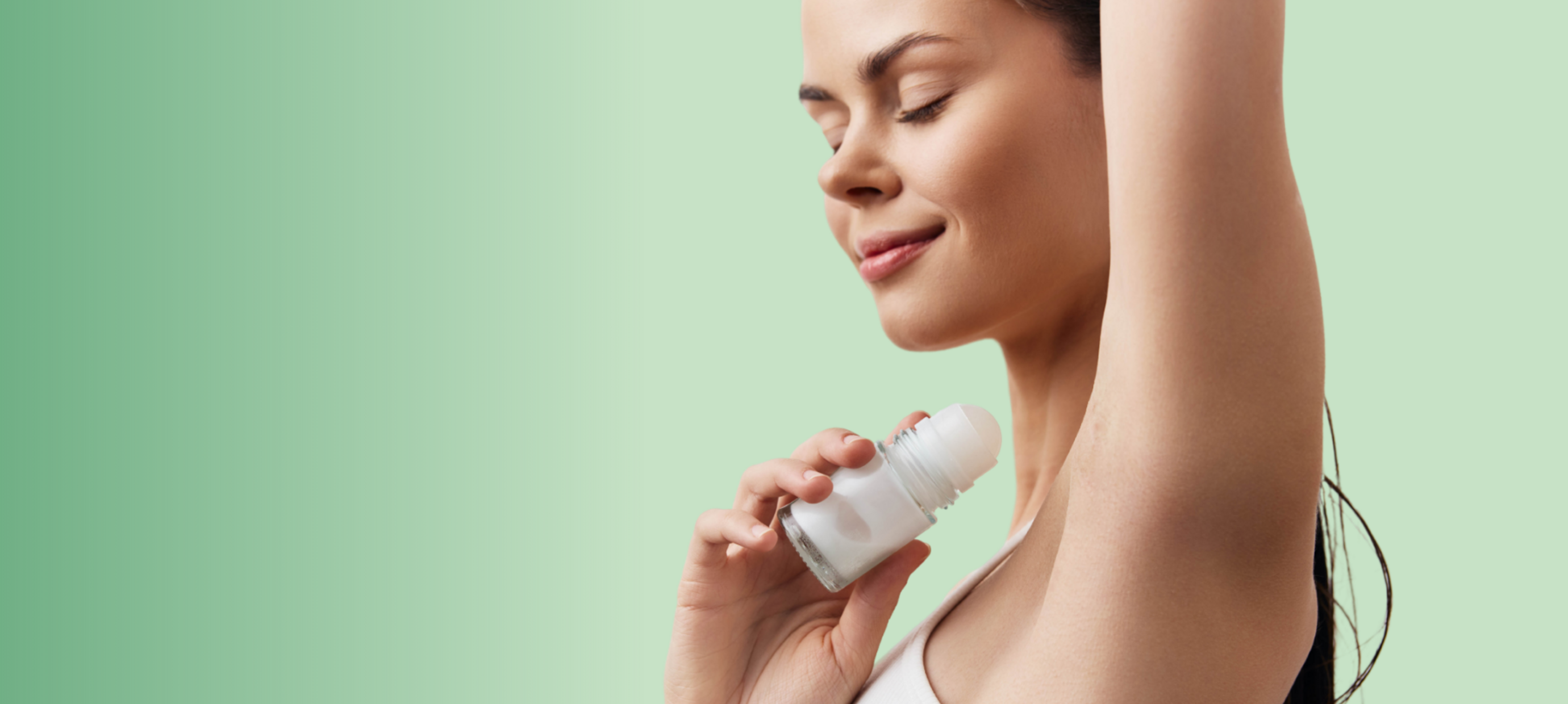
Sweat does not stink.
Most people think that those dirty odors come from sweat itself. This indeed simply seems to be the direct link: you sweat, and a few hours later, you smell it. Then the solution seems quickly found: the more sweat you block, the less odor. A strong, traditional deodorant, therefore, often holds back as much sweat as possible. But, strangely, this method does not always work. A stronger-smelling deodorant is therefore not always better.
Actually, our idea about sweat is not entirely correct: it might sound crazy, but sweat itself is virtually odorless. The cause of the stinking lies somewhere else.
Are you ready for summer? Check out our deodorants here!
What is sweat then actually
Sweat originates from two types of glands: the eccrine and the apocrine. The eccrine or exocrine glands are scattered all over your body and produce a watery, virtually odorless fluid. This is the sweat that is released during exertion or heat. It serves mainly to regulate your body temperature. If it’s warm, then the eccrine glands cool your skin down a bit.
The apocrine glands lie in specific spots that you often associate with sweat: your armpits and groin. The sweat that comes out of here is different in composition than that from the eccrine glands. It contains proteins and fats, in addition to water. On itself, this sweat hardly smells like anything; it only starts to stink when it comes into contact with what lives on your skin.

Where do those dirty odors arise?
On your skin live by nature countless bacteria, also on the spots where you sweat the most. This is nothing to worry about: they make part of a healthy system. Yet they can cause considerable discomfort, because they are the ones that cause sweat [odor]. They break the sweat down, namely, and during that breakdown process, arise the substances that we know as body odor.
The more bacteria and the faster they multiply, the faster and stronger the odor arises. Specific types of bacteria cause the typical ‘sour’ odor. That explains the well-known ‘after a few hours’ feeling: there is not simply more sweat produced, but the bacteria population has just gotten enough time to react.
Why most deodorants do not tackle the problem
Most deodorants can be divided into two types. Firstly, there are antiperspirants. These mostly use aluminum salts. Those salts temporarily clog the sweat glands, whereby less sweat reaches the skin. But as soon as the pores open up again, bacteria get a chance anew.
Classic deodorants often choose the second route: perfume. This masks the odor that the bacteria produce, but without taking away the cause. As soon as the perfume fades during the day, the underlying odor comes up again.
Both routes focus on the symptom. They mask the sweat or the odor, but do not so much prevent the growth of ‘bad’ bacteria that cause the odor.
What would work?
Innovative deodorant goes therefore not so much against sweat or odor, but against the bacterial growth itself. Ingredients that limit the bacterial population tackle the problem at the source.
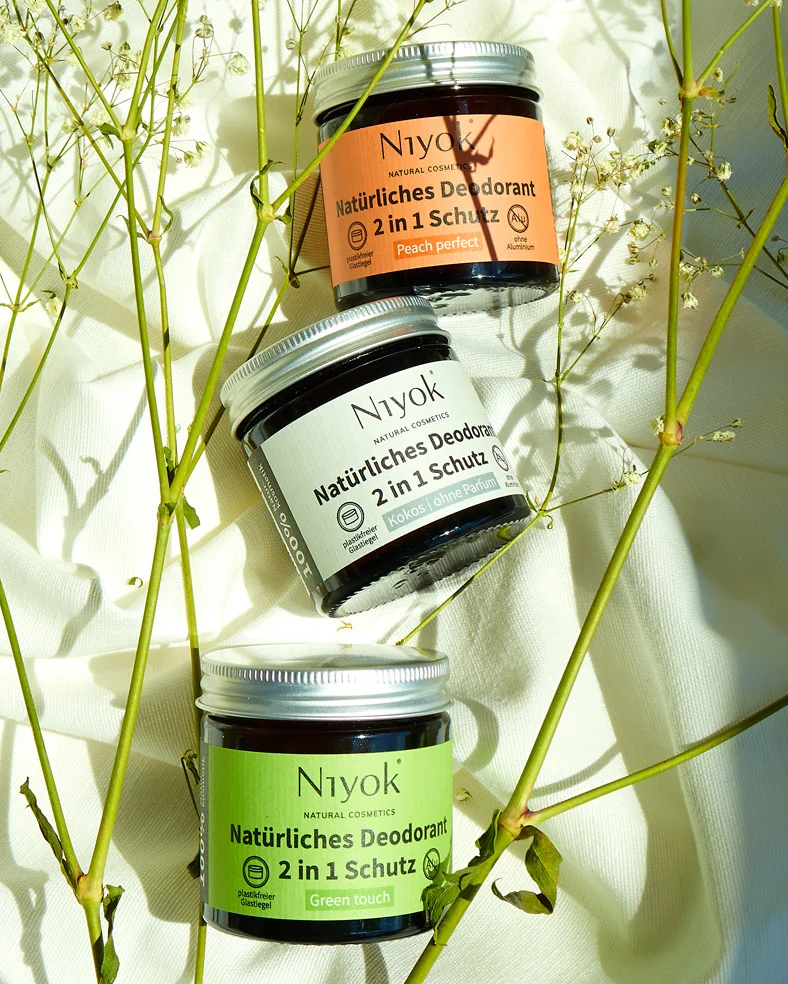
That is the approach of the Niyok deodorant creams: these creams work with natural ingredients like coconut oil, which, by nature, have a mild antibacterial effect. The skin then remains breathing, but there is less breeding ground for the bacteria that normally cause the odor.
How our deodorants tackle it
The Niyok deo creams are a good example of a formula that tackles the bacteria problem at the source. This formula contains coconut and sage oil, both mildly antibacterial, and prevents odor actively via four natural ingredients instead of masking it. Available in four scents, including Touch Green (cardamom and mimosa) and Light Ocean.
For those who have sensitive skin or just prefer to work without scent, the perfume-free roller from Derma is an option. This does contain aluminum salts, but is free of perfume and colorants, and dermatologically tested. That makes it a suitable choice for people for whom irritation by synthetic fragrances is the biggest problem.
Finally, the deodorant from UpCircle works not by inhibiting bacterial growth, but by absorbing the moisture. The deodorant cares for your skin based on macadamia and coconut oil, which keeps your skin soft and cared for. And because the stick sits in a refillable holder of 100% recyclable aluminum, you simply refill it with a new refill. This way, you prevent having to throw away new packaging.

What can you do yourself?
Next to a good (ecological) deodorant, you can already reduce the daily discomfort with a few simple adjustments. Ensure firstly for a clean, dry basis for your deodorant. Bacteria thrive, namely, the best in a damp environment. Choose naturally for natural materials like cotton, linen, or wool, instead of synthetic fabrics like polyester. These breathe better, whereby your skin remains cooler and drier.
Are you switching over from a traditional antiperspirant to a natural deodorant from Niyok? Be aware of a transition period of two to four weeks. Your skin must literally ‘detox’ for a moment, and the balance of the bacteria population must restore itself. If you then sweat or smell just a bit more, that is completely normal.
Find the match for your skin
The great mystery of the ‘worn-out’ deodorant is thus solved differently than you probably thought: your sweat does not stink of itself at all, but it is the bacteria under your armpits that create discomfort.
How you solve that discomfort depends entirely on what fits best with your skin. Perfume-free protection from Derma, the natural ingredients of Niyok, or taking away the moisture with UpCircle: it’s about what works for you. With this knowledge and a little patience during the switch, you keep the control.
Sources: UGent, Universiteit van Nederland, Women’s Health