




Sunscreen is an essential protection against the harmful effects of the sun, such as sunburn, premature skin aging, and skin cancer: but, which sunscreen factor do you choose? Are you unsure which sunscreen factor suits your skin? These tips will help you choose. Using the right sun protection factor (SPF) is crucial for effective protection. Here are five considerations you can take into account when choosing which sunscreen factor to use.
Which sunscreen factor is suitable for me? SPF 15, factor 30 or 50? 5 Tips to choose easily

1. Determine your skin type
Skin types vary enormously and determine how quickly your skin burns or tans. In general, skin types are divided into six categories, from very fair skin with little pigment (type I) to skin types with a lot of pigment (type VI).
- People with a skin type with very little pigment (types I and II) burn faster and should use a higher SPF, such as SPF 30 or higher. Don't forget to reapply sunscreen at least every two hours.
- Types III and IV can use SPF 20-25, but if they stay in the sun for a longer period of time, they should use factor 30 or 50 (+).
- Types V and VI can sometimes get away with a lower SPF, such as SPF 15, but it is still important to provide sufficient protection against UV radiation. Especially if you stay in the sun for a longer time, choose at least factor 30.
Tip: To determine which skin type category you fall into and which sunscreen factor you need, you can use, for example, this table.
2. Which sunscreen factor depends on the UV Index?
The right factor of your (natural) sunscreen depends on the strength of the UV index. The UV index is a measure of the strength of the sun's ultraviolet (UV) radiation at a specific location and time. A higher UV index means stronger radiation and a greater chance of sunburn. On days with a high UV index (6 or higher), it is wise to use a sunscreen with a higher SPF, such as SPF 50. With a lower UV index (0-2), a lower SPF, such as SPF 15, may be sufficient. To determine which sunscreen factor you need, you can check the UV index via weather apps or websites to prepare for your day.
3. What time of day are you going into the sun?
The intensity of the sun's rays varies throughout the day. The sun is at its strongest between 10 a.m. and 4 p.m. During these hours, UV radiation is most intense. Actually, it is best to avoid direct sun between 12 p.m. and 3 p.m. Take an umbrella with you, sit under a tree, or plan to go outside later in the day. Are you going into the sun between 10 a.m. and 4 p.m.? Then choose a higher SPF than you would normally use, for example, factor 30 or 50, and apply it more often than the standard of reapplying generously every 2 hours.
Tip: Are you still looking for sunscreen? Then check out our blog about sunscreen without junk! Or do you want to know more about the ingredients in your sunscreen? Then check out the blog about zinc oxide sunscreen
4. Factor 30 or 50? What activity are you going to do?
The type of activity you undertake also influences which sunscreen factor is best. Below we have listed a number of activities, where it is useful to think extra carefully about which sunscreen factor to use:
- Sports/athletic activity: Choose a sunscreen that is sweat-resistant; you may also need to apply this more often. Especially if you are going to exercise in the sun, choose a higher factor such as factor 30 or 50.
- Swimming: When swimming, it is important to choose a water-resistant sunscreen and ensure you give it time to absorb. For most sunscreens, this takes about 30 minutes.
- Are you going to swim or snorkel in the bright sun? Then make sure you apply sunscreen more often, use a higher SPF factor, and possibly also wear a swim shirt or rash guard with UV protection. The combination of water and sun means you can burn quickly. Apply, for example, every hour instead of every two hours.
Tip: In addition, it is important to choose an eco-friendly and especially coral-friendly sunscreen if you are going snorkeling or diving in tropical regions. Some chemicals in sunscreens can be harmful to coral reefs. Look for labels that indicate the sunscreen is "reef-safe" or "coral-friendly".
5. Your age and skin sensitivity also determine which sunscreen factor
Age plays an important role in the choice of sunscreen. Babies, children, and the elderly have thinner and more sensitive skin, making them burn faster. Therefore, a higher SPF, such as factor 30 or 50, is often recommended for children and the elderly. In addition, there are special sunscreen products that are gentler on sensitive skin and contain fewer irritating ingredients. When in doubt, choose the higher SPF for these vulnerable age groups! See here for natural sunscreen for children.
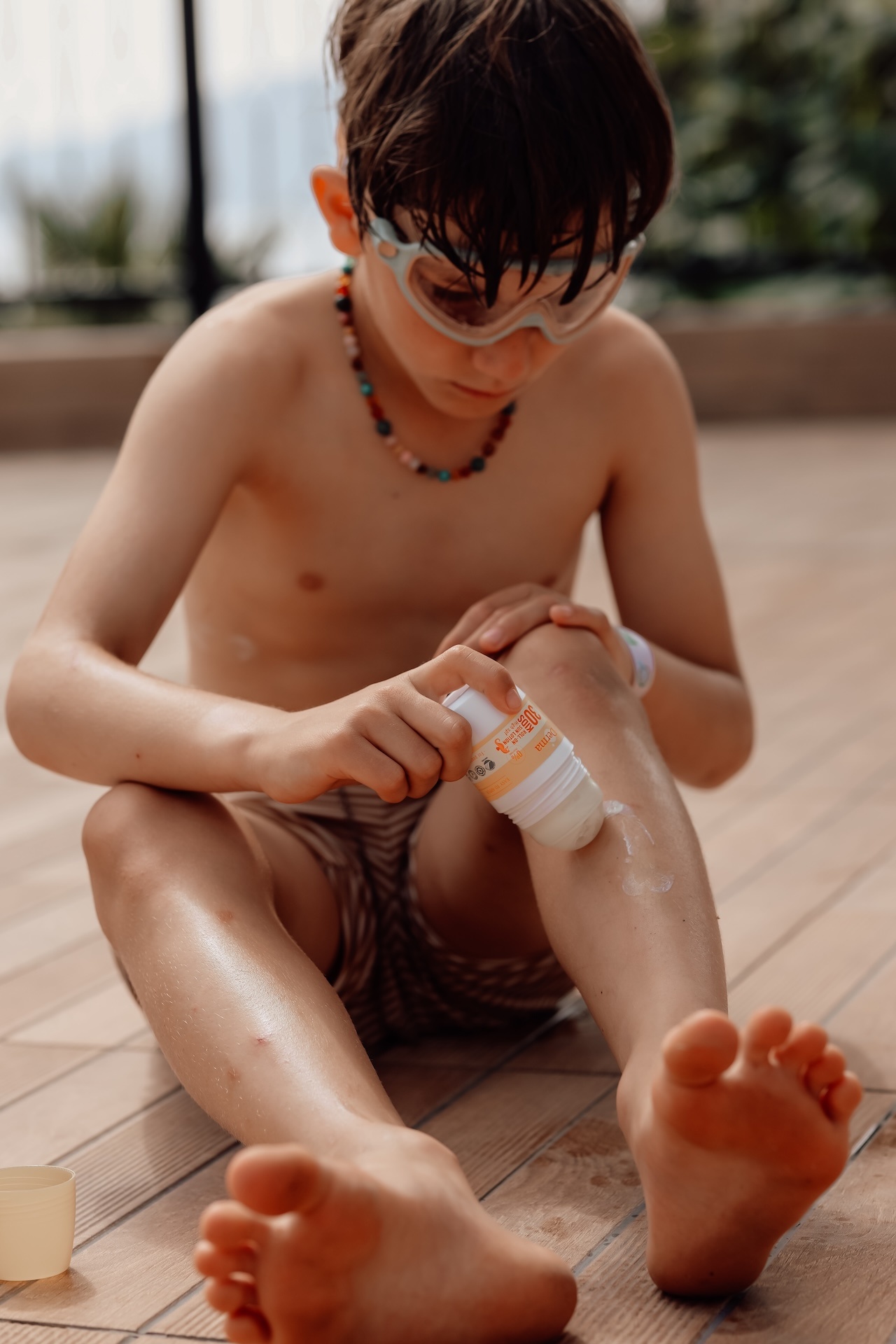
Which sunscreen factor will you choose this summer?
Hopefully, these tips have helped you choose which sunscreen factor is suitable for your skin type and activity. Are you looking for an eco-friendly alternative? At Grace Is Green, we consider this very important and have the best brands, tested for sustainability. For example, you will find Derma Sun factor 30 or 50 with us, which is suitable for sensitive skin types, with a hypoallergenic formula. Or choose a natural sunscreen from Sol de Ibiza that contains fully natural and biodegradable ingredients. Order them quickly and go into the sun well prepared. Gentle on your skin, radiant in the sun, and kind to the planet. Together, we are one step closer to more planet-friendly living.